

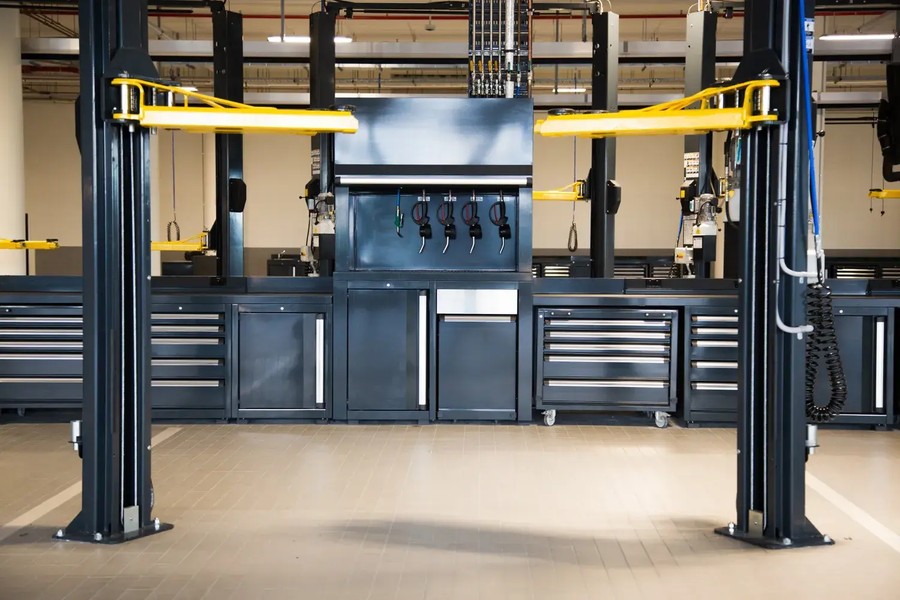
All workshops begin with good planning. If you’re in the automotive repair, manufacturing, engineering or maintenance industry, the manner in which your workplace is arranged significantly influences your everyday productivity. Careful planning of a workshop will enable staff to move freely, access tools easily and complete tasks without unnecessary delays.
There are many companies that only look into purchasing equipment, but the fact is the layout of the equipment is as important. It can be easier to tackle everyday tasks if you create work zones, provide sufficient storage, and leave sufficient space for larger jobs. That’s why there are so many different solutions out there that are designed to make workshops fit out easy, so that businesses can continue to enjoy functional spaces that remain conducive to the business’ expansion.
Good planning also helps you to avoid costlier changes in the future. Workshops are useful for a long time because they are considered in the context of future needs.
Selecting equipment that can work together.
The best workshop organization is achieved by running all equipment as a single system. Work benches, storage cabinets, tool trolleys and shelving should all work well together in harmony rather than being hodgepodge from various times.
Repetitive designs of equipment make for a cleaner, more organized and efficient working environment. Staff are aware of where all the tools are kept, so the daily procedure is quicker and less risk of losing them.
Durable equipment is also a key element. Quality materials resist the stress of constant use, and businesses can avoid costly replacements and repairs. It is better to invest in robust workshop furniture than on cheaper, which wears out quickly.
If workstations and storage systems are compatible, the business that opts for workshop fit out cheap and easy will find that the space will be much more efficient.
A Safer and More Comfortable Workplace is a project that is currently underway.A Safer and More Comfortable Workplace is an ongoing project.
Always think safety when it comes to any fit out. A neat work area minimises risks and enables workers to focus on their work rather than clutter.
Heavy equipment is well secured in place, and regularly used equipment is conveniently stored and easily accessible. There are spacious walkways for the movement of machinery, equipment and persons to comfortably circulate within the workshop without creating undue risk.
Lighting is also something to be considered. Proper and uniformly distributed lighting aids workers to do fine work and helps minimize eye strain on extended working hours.
Comfort shouldn’t be ignored either. Technicians can work comfortably all day long as workstations are located at appropriate heights to provide a range of benefits, including reduced fatigue and better posture. The small improvements can add to improved productivity and fewer workplace injuries.
Time-saving organization.
The key to a great workshop is the time that it saves. When workers waste time looking for tools or moving equipment out of the way, those little delays can occur at many times of the day and it adds up.
Organised storage systems provide clarity – every item has its place. Labeling drawers, cabinets and shelves make it easy for everyone to put tools away after work, keeping the workshop orderly even during the busiest of times.
Organised layouts also facilitate training new employees as the company grows. New staff members when arriving on site can easily see where equipment is located and how the work areas are organised.
This hands-on strategy is one of the primary reasons why many businesses in Australia seek solutions to ensure workshop fit out made easy without taking their operations offline.
A successful workshop should support long-term success.
A workshop should be useful to the business today and for years to come. Flexible layouts enable equipment to be moved around to suit changes to services, machinery or staff.
In modern workshops, there are storage systems which can be expanded over a period of time rather than replaced altogether. Businesses can find modular furniture to be more flexible and also, more efficient in managing future growth.
This also allows for workshop equipment to run at peak performance with regular maintenance. Maintain a professional working environment by cleaning storage systems, inspecting workstations and replacing worn parts as necessary.
A good workshop sets the tone for a positive employee and customer experience. It shows professionalism, enhances workflow and makes all tasks run smoother. Investing in smart planning, using quality equipment and organised layouts will mean that business can have an efficient workplace that is productive and prepared for whatever the future brings.