

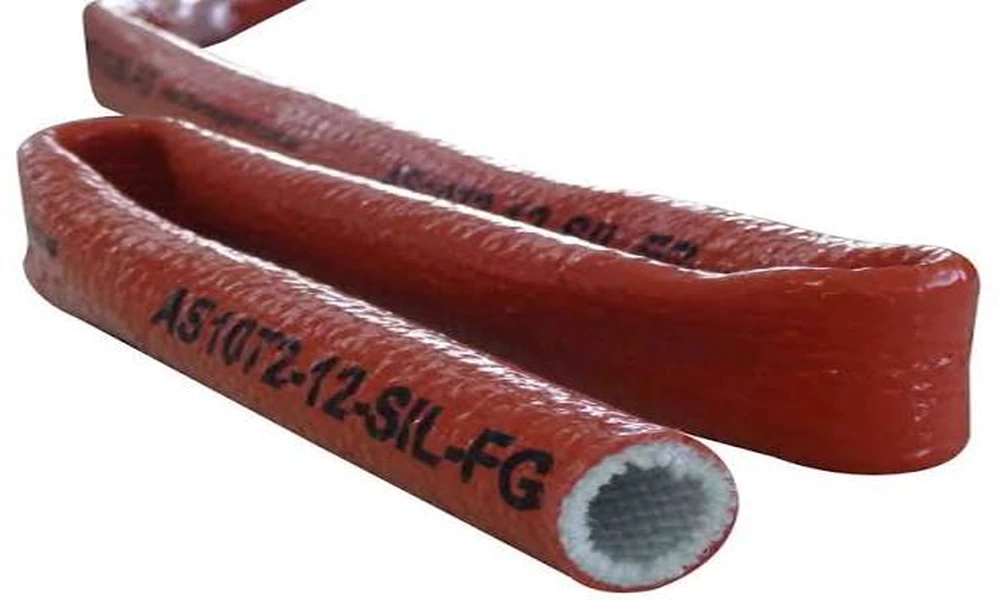
Fire retardant silicone sleeving plays an important role in the safety of many different applications and workplaces across different working environments and industries. There are some key features and benefits of fire retardant silicone sleeving that we will get into further. First, where do you see silicone sleeves used most commonly and what are they used for?
What does silicone sleeving do?
Silicone sleeving helps to protect wiring, cables, and hose systems by offering a high level of thermal insulation, protection against heat and fire, high dielectric strength, and resistance to UV, chemicals, and other environmental hazards.
What are the common industries and applications where silicone sleeving is used?
The following are some of the key industries and applications where silicone sleeves are used every day.
- Aerospace and automotive industries – silicone sleeving is used to protect wiring and fluid hoses near engine blocks, as well as to protect exhaust systems in the challenging automotive and aerospace industries.
- Medical sector and food industry – non-toxic, biocompatible silicone sleeving can be used to maintain strict safety standards in the medical and food industries. It ensures that fluid transfer is safe and sterile.
- Industrial manufacturing – the insulation of high-voltage cables around heated machinery in challenging working environments helps to control heat levels and ward against damage by extreme temperatures.
What are the key benefits of fire retardant silicone sleeving?
There are several key benefits and performance features that make fire retardant silicone sleeving beneficial in a wide range of industries and applications, including:
- Extreme temperature functions – silicone sleeves function to a high level across a wide range of extreme temperatures, from as low as -60°C to 250°C (and up to 300°C for short-term exposure). Within this temperature range there is no worry of the sleeving melting, cracking, or becoming damaged.
- Electrical insulation – provides dielectric strength, providing extra protection for wiring from voltage spikes and short circuits.
- Flexibility – silicone sleeves are flexible and elastic, even when the temperature is extremely low. This makes it easy to install around tight bends or where there are irregular shapes within a pip, hose, or cabling system, without damaging the sleeve.
- Chemical and fluid stability – designed to repel water, oils, mild chemicals, and solvents easily. This protects it from degradation and corrosion in environments where there are potential fluid and chemical hazards.
- Environmental protection – silicone sleeves are designed to provide protection against prolonged exposure to UV and moisture, making it the perfect protective layer in harsh working environments both indoor and out.
Depending on the industry you work in, and the specific applications that you are looking to protect, there are different types of silicone sleeving that can be installed to improve safety standards. There are a range of colours and sizes to suit specific applications, including those that are required to insulate lead-outs and connections in transformers or to insulate carbon brushes and thyristor connections. Cut to length, fire retardant silicone sleeving can be matched to the exact cabling and pipe insulation that you require, protecting against potential fire and offering good levels of temperature protection. In industries where there is the risk of fire, this level of flexibility and resistance to soldering is invaluable.
Finding the right fire retardant silicone sleeving for your needs
Understanding the benefits and the key features of fire retardant silicone sleeving is important, as is the requirement to adhere to strict regulations and safety standards. Finding the correct supplier for your silicone sleeving puts your mind at ease. It ensures that you have access to the highest quality of silicone sleeves to suit your industry, worksite, and applications, raising performance and safety standards.